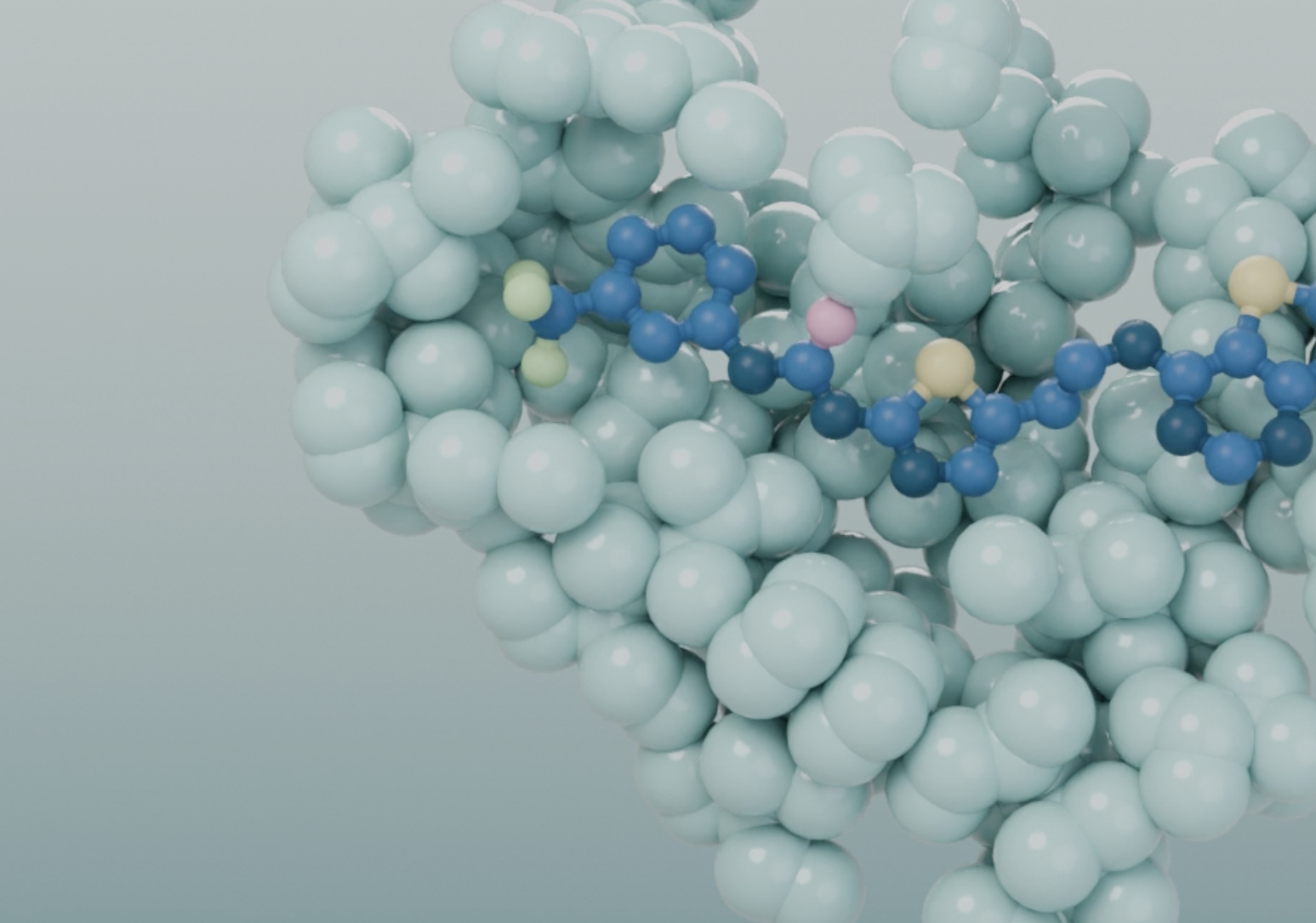
Protein flexibility is fundamental.
All proteins are dynamic, constantly changing shape as they carry out their biological functions. Over the past decade, our founders have pioneered research into how small molecules interact with these motions, stabilizing distinct protein conformations and revealing previously hidden binding pockets.
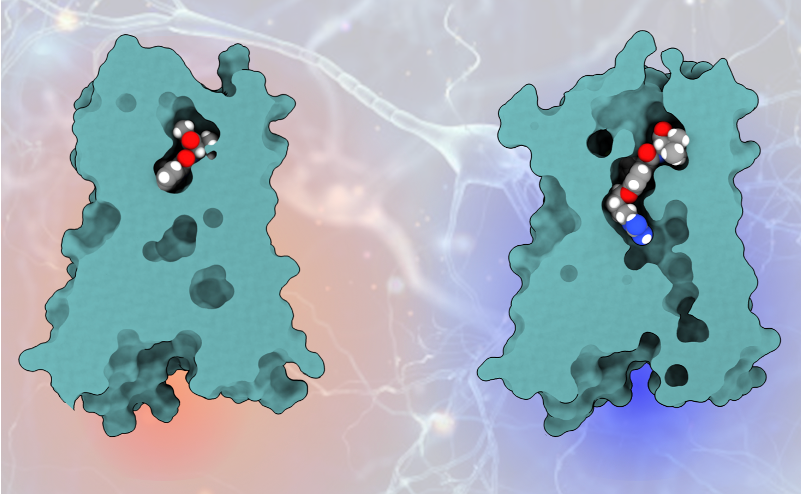
Yet most structure-based drug design methods still rely on static protein structures, overlooking binding opportunities that emerge through protein motion. Even modern AI models, such as protein–ligand co-folding, struggle to predict novel conformations.
A cryptic pocket in CB1 drives peripheral and functional selectivity, Nature, 2025.
SAGE-Flex: Generative AI meets protein dynamics for molecular design
SAGE-Flex is our family of foundation models, trained on proprietary data. SAGE-Flex is the first model architecture built to explore protein flexibility and chemical space together with high efficiency. Starting from a target structure alone, SAGE-Flex generates novel small molecules and the matching conformation of the binding site.
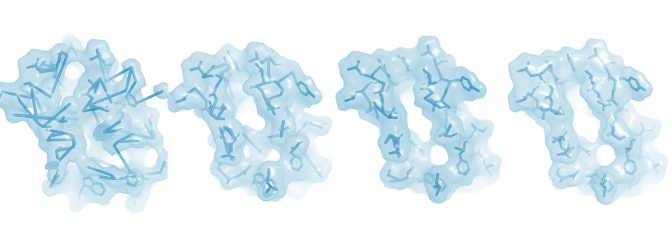
Three innovations power our platform
Proprietary training data
Molecular dynamics simulations that capture protein motion in water and membranes, not just static crystal structures.
Fragment-based generative design
By assembling molecules from chemically meaningful fragments, our models generate diverse, drug-like structures while incorporating synthetic feasibility from the outset.
An integrated AI discovery platform
Generative models, predictive models for potency, selectivity, and ADME, and agentic automation work together to accelerate design-make-test cycles, improving operational efficiency and enabling rapid iteration.